The built-in coffee machine, taken seriously
Updated 7 July 2026 · By The Kitchen Affair atelier · 7 minute read
The first ten minutes of the day deserve engineering. A built-in coffee machine — plumbed, flush with the cabinetry, warm-lit at 6am — is one of the most-used luxury appliances in any kitchen, and one of the most misunderstood purchases. The genuine choice is between three philosophies: Miele and Gaggenau building the machine into the architecture; V-ZUG doing the same with Swiss restraint; and Jura making the case that the best machine need not be built in at all. Here is how to choose, including the plumbing and maintenance questions your barista never mentions.
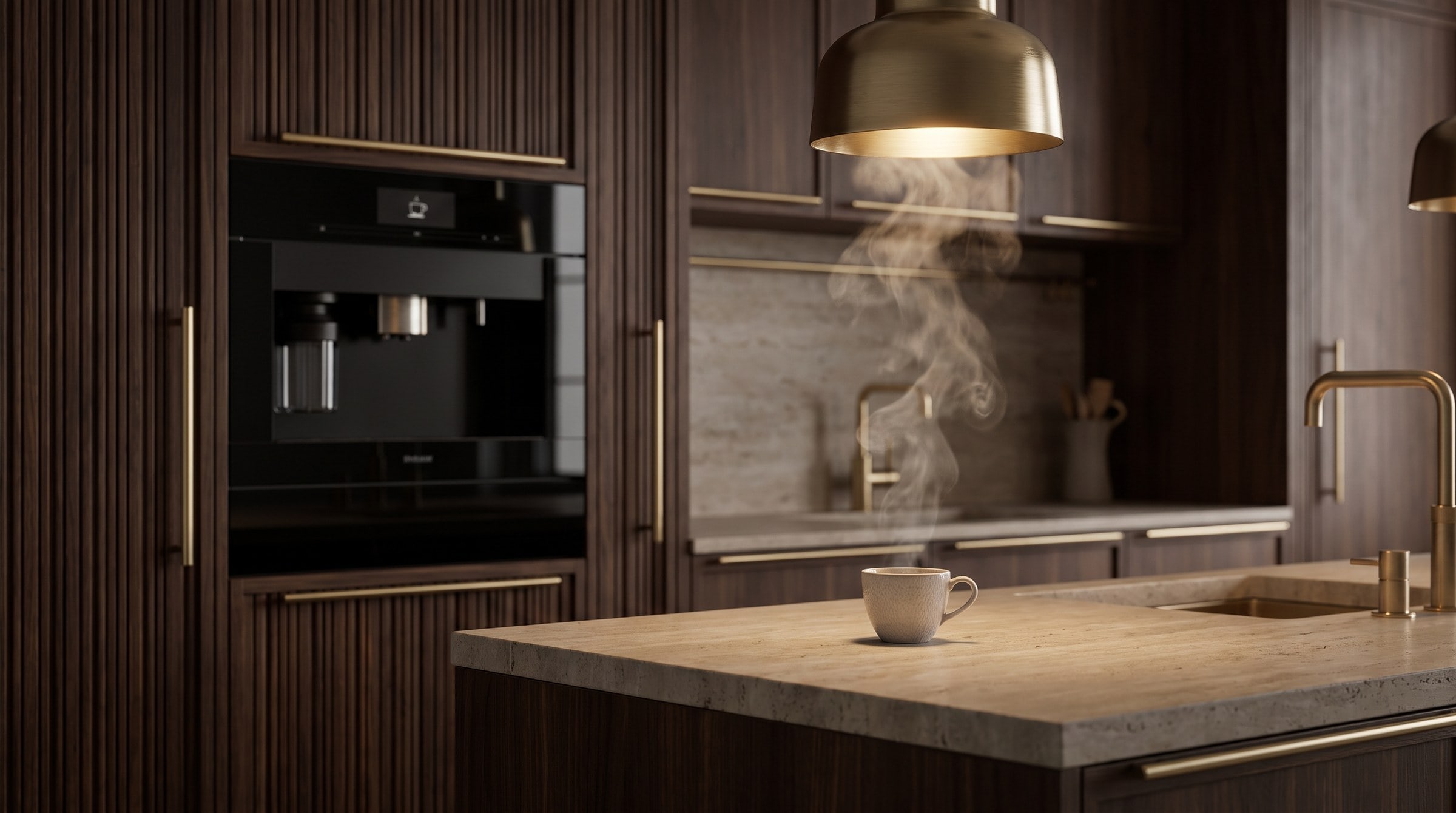
Built-in or freestanding: the real question
A built-in machine buys you architecture: flush integration at eye level, plumbed water so tanks never run dry, and a kitchen elevation with one clean line. It costs you flexibility — the machine is part of the joinery, service means a technician visit, and upgrading in eight years means matching an aperture.
A flagship freestanding machine — Jura’s larger pieces are the reference — buys you the opposite: the best extraction engineering per rand, effortless replacement, and placement anywhere with a water tank or a discreet plumbing kit. It costs you the built look. In pure coffee terms, the freestanding flagship frequently wins; in kitchen terms, the built-in usually does. Decide which kitchen you are making first.
The built-in houses
Miele’s CVA range is the most complete built-in family: bean-to-cup with automatic milk systems, profiles for the household, and self-cleaning routines that make daily ownership genuinely low-effort. It pairs visually with Miele’s Generation 7000 ovens, which is how it is usually specified — one coherent bank of black glass.
Gaggenau’s 400 series espresso machine is the architectural statement: the same solid, industrial idiom as the ovens, designed for kitchens where the appliance wall is the room’s composition. Extraction quality is excellent, but coherence is the reason it is chosen.
V-ZUG’s coffee systems carry Swiss precision and pair with its steam ovens in the quiet, engineered kitchens the house is known for. Less common in South Africa than Miele, but a natural fit where V-ZUG cooking is already specified.
- Plumbed water
- The difference between a coffee machine and a coffee system. A fixed water connection with filtration means no tanks, better espresso, and one more reason the machine must be planned before cabinetry — not after.
- The milk question
- Automatic milk systems are wonderful and need daily rinsing, whichever house you choose. If your household drinks flat whites, weigh the cleaning ritual honestly against a manual steam wand.
- Service reality
- Bean-to-cup machines are the most maintenance-intensive appliance in the kitchen. Specify a house with service coverage in your city — this matters more for coffee than for any oven.
Designing a coffee station?
An hour with a senior consultant turns reading into a specification. Complimentary, and without obligation.
The coffee wall, and what it costs
The full expression — machine, warming drawer for cups, integrated refrigeration for milk, bean storage in dedicated joinery — is what designers call the coffee station or coffee wall, and it is the single most-requested feature in luxury kitchens we see. It is also where a plumbing point, a circuit and 60cm of elevation must be reserved at the drawing stage.
Everything here is price-on-application; indicatively, a built-in machine alone is a significant five-to-six-figure rand line, and a full coffee wall belongs in the appliance budget of the upper investment bands in our cost guide. The good news: no appliance in the kitchen returns more daily use per rand.
Frequently asked questions
Is a built-in coffee machine worth it over a Jura?
For pure coffee per rand, a flagship freestanding Jura is hard to beat and easy to replace. A built-in Miele or Gaggenau wins on architecture, plumbed convenience and integration with the rest of the appliance wall. Decide whether you are buying coffee or buying kitchen — both are legitimate.
Do built-in coffee machines need plumbing?
The better installations are plumbed with filtration — no tanks, more consistent extraction. Most built-in models can also run from an internal tank, but if you are planning cabinetry anyway, bring the water point; you will never regret it.
How much maintenance does a bean-to-cup machine need?
Daily milk-system rinsing (largely automatic on current Miele and Gaggenau machines), regular descaling if unfiltered, and periodic service. It is the most maintenance-intensive appliance in the kitchen — which is why local service coverage should influence the brand choice.
What does a built-in coffee machine cost in South Africa?
Price-on-application across the premium houses, dependent on model and exchange rate. Indicatively a five-to-six-figure rand investment before joinery; a full coffee station with refrigeration and warming drawers sits in the upper appliance bands of our Luxury Kitchen Cost Guide.
Prepared and reviewed by The Kitchen Affair atelier · Johannesburg · Updated 7 July 2026