Planning the kitchen — brief to first dinner
Updated 7 July 2026 · By The Kitchen Affair atelier · 9 minute read
Every regret we hear in consultations has the same shape: a decision made in the wrong order. The oven chosen after the cabinetry was built, so the aperture dictated the instrument. The extraction considered after the slab was cast. The lighting left to the electrician’s default grid. A luxury kitchen is not a shopping list — it is a sequence, and the sequence is the difference between a collection of beautiful products and a room that works for twenty years. Here is the order that protects you, and who should be responsible for each movement.
Begin with rituals, not layouts
Before a single line is drawn, the honest brief is behavioural: who actually cooks, and how? Is coffee a ceremony or a button? Does entertaining mean plated dinners for eight or open-house braais for thirty? Does the kitchen need to hide its work (a scullery culture, common in larger South African homes) or perform it (the island as theatre)?
These answers decide more than any floor plan. A household of serious cooks weights the budget toward cooking and extraction; entertainers weight refrigeration, wine and the coffee wall; families weight induction safety and storage. The old “working triangle” has given way to zone thinking — preparation, cooking, plating, washing, storing, hosting — and your rituals decide which zones deserve square metres.
Space and architecture: the moves you cannot undo
Next come the structural questions, because they close early: walls, windows, levels and the position of water, gas and drainage. An island needs clear circulation around all sides — cramped islands are the most common inherited mistake — and sightlines to living space and garden decide whether the kitchen joins the architecture or hides from it.
If a scullery or pantry is wanted, it must be born here: stealing space later never works. The same is true of duct routes for extraction (through floor, plinth or ceiling void) and of any structural opening. This is the stage where an interior architect earns their fee — everything after this is reversible with money; this is not.
At drawing stage right now?
An hour with a senior consultant turns reading into a specification. Complimentary, and without obligation.
Appliances before cabinetry — always
The single most valuable rule in this guide: specify the appliances before the cabinetry is designed, and never the reverse. Cabinetry is built around apertures, ventilation clearances, weights and services; when the ovens are chosen first, the joinery serves the instruments. When the joinery comes first, the appliance list becomes whatever fits the holes.
This is also the stage to reconcile the appliance suite with the home’s power reality — backup systems, solar, gas compliance — and with lead times, since imported instruments take eight to sixteen weeks to arrive. Our comparison guides for ovens, refrigeration and extraction exist for exactly this stage, and a specification consultation compresses weeks of research into an hour.
Cabinetry, surfaces, light
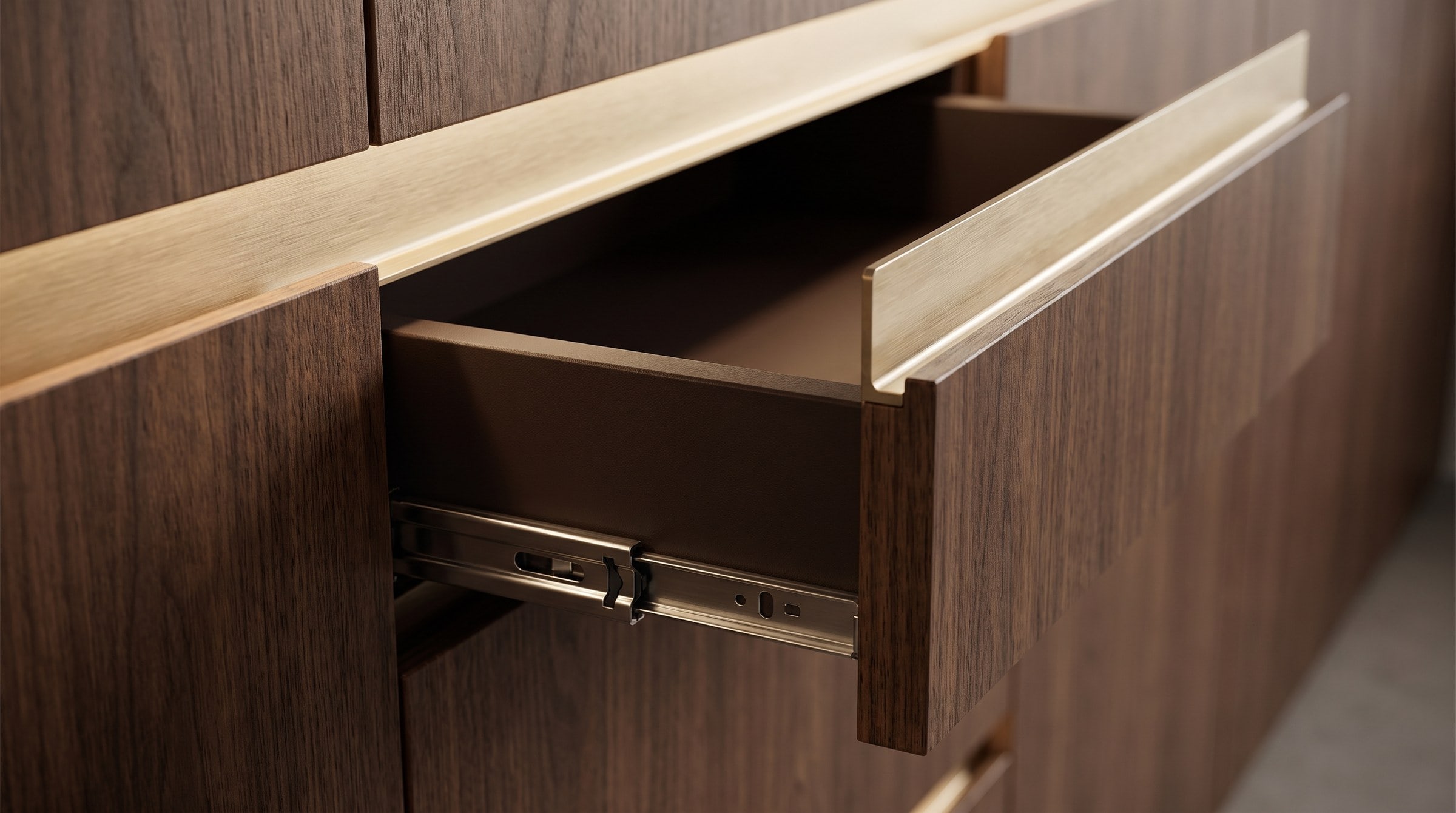
With appliances fixed, cabinetry design begins — the largest single line in most budgets, and the decision between imported European systems and local bespoke joinery (a full guide of its own). Interior fittings and motion hardware deserve attention here, not later: the hush of a drawer two hundred times a day is a Blum decision made at drawing stage.
Surfaces follow: worktops chosen for the actual cooking (porcelain and engineered stone forgive; marble asks for devotion), splashbacks, and the floor that ties the kitchen to the living architecture. Then lighting, designed in layers — task light where knives work, ambient light for the room, and the warm accent lines that stage the kitchen after dinner. Lighting left to a default downlight grid is the cheapest thing to specify well and the most expensive to regret.
Who does what
A luxury kitchen has at least three professions in it: the interior architect or designer who owns the space and its relationship to the home; the kitchen specialist who owns the composition — appliances, cabinetry system, ergonomics; and the installers and certified trades (electrical, gas, water) who own compliance and commissioning. On architectural projects a fourth, the project coordinator, keeps imports, trades and site in sequence.
The client’s job is smaller and harder: decide the rituals honestly, decide the investment band early (our cost guide exists to make that conversation concrete), and resist re-deciding closed questions late — the change order is where budgets go to die. A good specialist will tell you when a request is a mistake; that candour is what you are paying for.
- The sequence, compressed
- Rituals → space & services → appliance specification → cabinetry → surfaces → lighting → installation & commissioning. Money flows the same direction; regret flows backwards.
- The three early irreversibles
- Slab-stage duct routes, water/gas/drainage positions, and structural openings. Decide these with professionals before anything is ordered.
- The one rule
- Appliances before cabinetry. Always.
Frequently asked questions
Where do I start when planning a luxury kitchen?
Start with rituals, not products: how the household cooks, hosts and lives. Then fix space and services with an architect or designer, then specify appliances, and only then design cabinetry. The most expensive mistakes are sequence mistakes.
Should I choose appliances or cabinetry first?
Appliances, without exception. Cabinetry is designed around apertures, ventilation, weights and services. Choosing joinery first means your appliance shortlist becomes whatever fits the holes — the opposite of specification.
Do I need an interior architect and a kitchen designer?
On significant projects, yes — they do different jobs. The architect owns the space and its relationship to the home; the kitchen specialist owns the composition of appliances, cabinetry and ergonomics; certified trades own compliance. The Kitchen Affair works alongside your architect rather than replacing them.
How much should I budget before starting?
Decide the investment band before design begins — it disciplines every later choice. Our Luxury Kitchen Cost Guide sets out the five indicative bands South African projects fall into, from premium refresh to fully bespoke architectural kitchens. All final pricing remains P.O.A and is confirmed through consultation.
How early should I book a consultation?
Earlier than feels natural — ideally at sketch design for a build, or before demolition for a renovation, while services and duct routes are still cheap to move. A consultation at drawing stage routinely saves multiples of its cost in avoided rework.
Prepared and reviewed by The Kitchen Affair atelier · Johannesburg · Updated 7 July 2026