trends
The Art of the Hidden Kitchen
18 June 2026 · 6 minute read
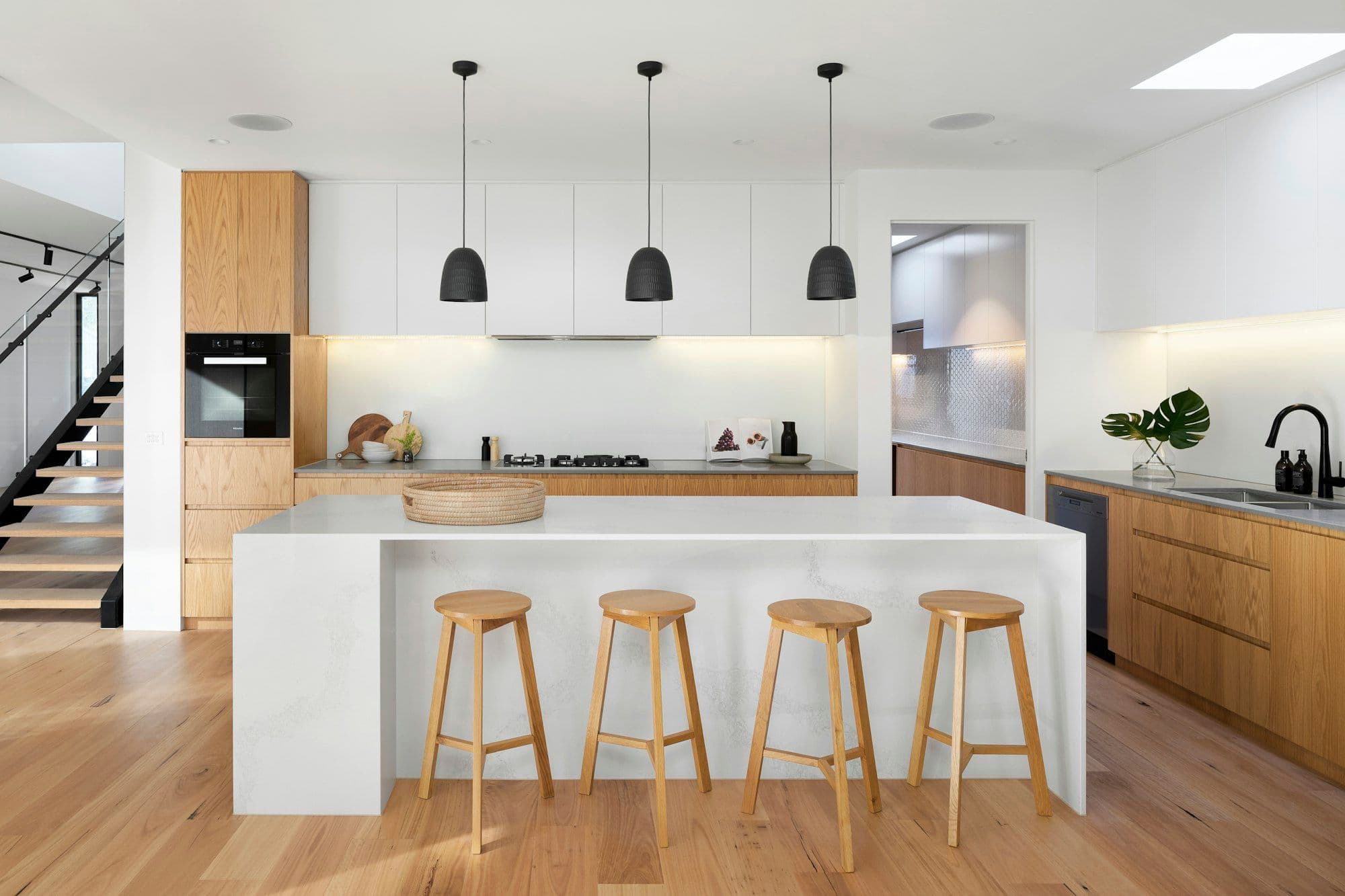
Handles are gone, hoods have vanished into cooktops, and refrigeration stands disguised as wardrobes. Inside the disappearing act reshaping Europe’s finest kitchens.
Walk the halls of EuroCucina or the studios of Munich’s kitchen ateliers and a pattern emerges: the kitchen is disappearing into the architecture, and in disappearing, it is becoming more important than ever.
Handles are gone, replaced by push-mechanisms and shadow-line reveals. Extraction has left the ceiling and moved into the cooktop itself. Refrigeration stands in monolithic, panel-clad columns indistinguishable from wardrobes. What remains visible is material: deep-grained walnut, honed stone, brushed metal in champagne and bronze.
Colour has warmed decisively. The greys of the last decade have given way to ivory, taupe, umber, and clay — palettes that flatter both food and faces. Black remains, but as punctuation: an appliance fascia, a tap, a frame.
The most significant trend, though, is invisible: specification depth. Clients are no longer buying appliances one by one; they are commissioning coherent systems — cooking walls, coffee stations, preservation columns — planned as one composition. It is how the great European houses have always worked, and it is the heart of how we work at the atelier.